The Loop Farmstead is a working agroecological farm on 4.6 acres in the homestead. We grow food, raise animals, and document what we learn for others walking the same path.
Work with the land, not against it. Ask what the land wants to grow. Plant for people you will never meet.
Farm Log
Taking a little time out of the heat after planting some pinto beans, cooling off and thinking.
Thinking on the farm probably, in the final valuation, takes more energy than the actual growing of plants.
When we arrived on the land I first identified the water flows. Where I can interrupt the energy of water to store it for the dry season. I made some calculation errors and so I've found myself analyzing again that initial work. The work seems like so much, digging by hand, but in the end the effort should pay off. This isn't the season for it though, as the ground is heavy with rain.
The second item on the list was, "given the water flows, where are the best places to put garden plots for crops?" I believe I have identified them and I've spent most of the late winter and spring defining those spaces by creating beds and planting with crops we had available for either transplant or sowing. Now as you would expect those areas are filling with volunteer plants and so my task has been to mulch, chop and drop, and weed whack depending on the location. Further analysis has shown that several of these identified spaces require specific alterations for the next season. Some require channels for water storage while others require flattening for terraces.
Also, wood is on my mind. The large walnut tree that fell has me thinking about the wood burning stove. If I had the money to install it I would. I am hoping I can scavenge enough materials to get it installed before winter. We drastically need to cut the cost of our oil heat bill. The ideal amount would of course be "zero dollars". "The grid" should be abandoned with preference given to "the loop."
Well I have cooled down and filled myself with another coffee. I should get back out there before the depression settles again. I went from accepting it and sleeping a great deal, to working through it. I prefer the sleep if we are being honest, but a farm doesn't build itself.
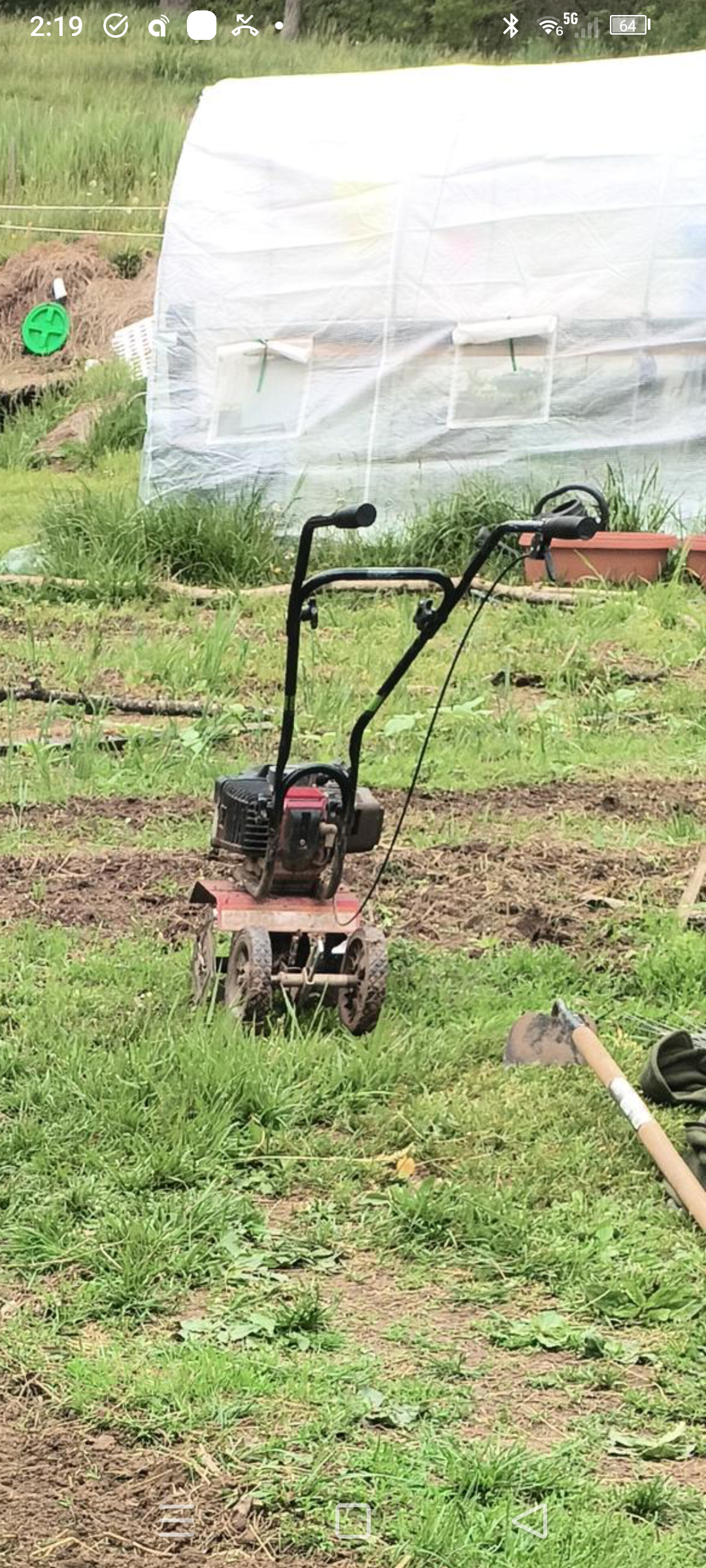
We harvested about 250 dandelion flowers and are trying our hand at making dandelion honey for the first time. The ground is wet, so I can't cut in any terraces.
There is one tree that will come down soon. It had been hit by lightning well before we moved here. Looking at it I don't think it will cause any issues for the house though. It is pretty far up the hill, and anxiety aside it seems to be leaning towards the other side of the property. But I'm not a tree expert so we will have to see what fate decides.
It is way too dangerous to cut down, nor can we afford to pay someone to do it. Even if we could afford it, I wouldn't want trucks driving around the land and damaging it. But I have pretty high confidence it won't hit the house.
Established Systems
Fruit Trees (40+)
Our orchard includes apples, pears, peaches, plums, and cherries. Planted for long-term production, these trees will outlive us. We chose heritage and disease-resistant varieties suited to Appalachian conditions.
Grape Vines (15)
Fifteen years from full harvest. We planted anyway. This is what it means to plant for people you will never meet. The vines teach patience. They teach trust in the future.
Annual Gardens
Succession-planted vegetables provide continuous harvest from May through October. We focus on storage crops (winter squash, potatoes, onions) and nutrient-dense greens (chard, kale, spinach).
Animals
Animals serve multiple functions in our system: pest control, fertility, meat, companionship, and land management.
🐷 Pigs
Two Berkshire pigs (George & Peppa). Harvested 2026-03-25, 250 lbs pork. Pigs clear land, till soil, and convert waste into protein.
🐕 Livestock Guardians
Two Great Pyrenees (Odin & Lada, 8 months). Protect future poultry and provide companionship. Working breed, not pets.
🐔 Poultry (Developing)
Chicken systems in development. Will serve multiple functions: pest control, fertility, eggs, meat, soil turning.
Infrastructure
Our infrastructure supports autonomous operation: water capture, energy generation, food preservation, and tool storage.
Philosophy
Everything we do is guided by agroecological principles and permaculture ethics. We work with natural systems, not against them. We build resilience, not just yield.
- Observe and interact — Learn what the land wants before imposing plans
- Catch and store energy — Rain barrels, compost, seed saving, preserved food
- Obtain a yield — Every system should produce something useful
- Apply self-regulation — Limit consumption, accept feedback
- Use and value diversity — Multiple varieties, multiple functions, multiple backups
- Use edges and value the marginal — Edge zones are most productive
- Respond creatively to change — Adapt, improvise, learn from failure