Dandelion — Taraxacum officinale
Type: Perennial
Family: Asteraceae (Sunflower family)
Sun: Full sun to partial shade
Water: Low to moderate (drought-tolerant once established)
Soil pH: 6.0-7.5
Hardiness: Zones 3-10
🌱 Expected Yield
- Per plant: ¼-½ lb dried leaves per season (multiple harvests)
- Per plant: ¼-½ lb dried root (Year 2+, fall harvest)
- Per plant: 50-100+ flowers per season
- Per patch (10'x10'): 8-12 lbs dried leaves, 10-15 lbs dried roots (80-100 plants)
- Lifespan: 5-10+ years (deep taproot, essentially permanent)
🏺 Heirloom Varieties & Species
Common Dandelion (Taraxacum officinale)
- Source: Grows wild everywhere, herb nurseries, Seed Savers Exchange
- Notes: Most common species. Yellow flowers, puffball seeds. Native to Europe/Asia, naturalized worldwide. Most researched medicinally.
'Vert de Montmagny' Dandelion
- Source: French seed collections, specialty herb nurseries
- Notes: Large leaves (12-15"). French variety. Less bitter. Cultivated as vegetable.
'Amélioré à Coeur Plein' Dandelion
- Source: European vegetable collections
- Notes: Improved variety. Large, thick leaves. Less bitter. Grown for salad.
Red-Seeded Dandelion (Taraxacum erythrospermum)
- Source: Wild populations
- Notes: Reddish seed stalks. Native to North America. Similar properties.
Coast Dandelion (Taraxacum ceratophorum)
- Source: Native plant specialists (western US)
- Notes: Native to western North America. Different species, similar use.
Koki-Tanpo (Japanese Dandelion)
- Source: Asian herb collections
- Notes: Japanese variety. Traditional use in Asian medicine.
Dandelion Hybrids (Taraxacum spp.)
- Source: Wild populations
- Notes: Many local varieties exist. All have medicinal properties.
Note: T. officinale is the primary medicinal species. Cultivated varieties are less bitter (better for eating) but may have slightly lower medicinal potency.
📜 Cultural History
Domesticated: Not domesticated—wild-harvested, considered "weed"
Historical Record: - Ancient Greece: Theophrastus (371-287 BCE) mentioned dandelion. Dioscorides (77 CE) recommended for liver, digestive issues. - Ancient Rome: Pliny the Elder (23-79 CE) described medicinal uses. - Medieval Europe: "Dens leonis" (Latin) = Lion's Tooth (serrated leaves). Used for liver, spleen, kidney ailments. - Anglo-Saxon England: Called "piss-a-bed" (diuretic use). One of nine "sacred herbs." - 10th century: Welsh physicians recorded dandelion use for liver, digestion. - 17th century: Nicholas Culpeper (1616-1654) recommended for liver, gallbladder, dropsy (edema). - Colonial America: Brought by settlers as food, medicine. Essential frontier herb. - 19th century: Official in U.S. Pharmacopoeia. Recognized for liver, digestive support. - Traditional Chinese Medicine: "Pu Gong Ying"—used for 1,000+ years (liver, breast health, infections). - Name origin: French "dent de lion" = lion's tooth (serrated leaves); "Taraxacum" from Greek "taraxis" = disorder + "akos" = remedy
Cultural Significance: - Medieval medicine: Liver, gallbladder, digestive support - Anglo-Saxon sacred herb: One of nine sacred herbs, protective power - Traditional European medicine: Spring tonic, liver cleanser, diuretic - Appalachian tradition: Spring greens, wine, digestive bitter - Chinese medicine:清热解毒 (clear heat, detoxify), breast health - Modern herbalism: Liver support, digestive bitter, diuretic, skin health - Symbol of wish-granting, resilience, oral tradition (blow seeds, make wish) - Indicator plant: Signals compacted soil, calcium-rich soil
🌾 Seed Saving / Propagation
- Seed method: Seeds produced in puffball (achenes with parachute). Harvest when fluffy. Easy to collect.
- Isolation: 2+ miles (wind-pollinated, insect-pollinated)
- Viability: 3-5 years
- Division: Every 4-5 years in spring or fall. Dig entire taproot, divide crown into sections.
- Root cuttings: Possible—2-3" root sections planted vertically.
- Self-seeding: Readily self-seeds. Wind disperses seeds widely.
- Special notes: Seeds germinate easily (no special treatment). Germination 7-14 days. Often grows without planting.
💊 Medicinal Preparations
Dandelion Leaf Tea (Infusion)
Uses: Diuretic (water retention), kidney support, premenstrual bloating, high blood pressure (mild)
Recipe: - 1-2 tsp dried dandelion leaves (or 2-3 tbsp fresh) - 1 cup boiling water - Steep 10-15 minutes, covered - Strain, drink 2-4 cups daily
Notes: Bitter taste (add honey, lemon). Unlike pharmaceutical diuretics, dandelion is high in potassium (replaces what is lost). Safe for long-term use.
Dandelion Root Tea (Decoction)
Uses: Liver support, digestive bitter, skin conditions, constipation, blood sugar support
Recipe: - 1-2 tsp dried dandelion root (or 1 tbsp fresh, chopped) - 1 cup water - Simmer 15-20 minutes - Strain, drink 1-3 cups daily
Notes: More bitter than leaf tea. Roast root for coffee substitute (see below). Take before meals for digestive benefit.
Dandelion Root Tincture
Uses: Long-term liver support, digestive tonic, skin conditions, blood sugar regulation
Recipe: - Fill jar ¾ with dried dandelion root (chopped) OR ½ with fresh root - Cover with 80-100 proof vodka (1-2 inches above plant material) - Seal, label, store in dark place 6-8 weeks (roots need longer extraction) - Shake daily - Strain through cheesecloth, store in amber dropper bottles - Dosage: 30-60 drops (1-2 mL) 3-4x daily, before meals
Shelf life: 3-5 years
Dandelion Leaf Tincture
Uses: Diuretic support, kidney tonic, water retention
Recipe: - Fill jar ¾ with dried dandelion leaves OR ½ with fresh leaves - Cover with 80-100 proof vodka - Seal, label, store in dark place 4-6 weeks - Shake daily - Strain, store in amber dropper bottles - Dosage: 30-60 drops (1-2 mL) 2-3x daily
Shelf life: 3-5 years
Dandelion Flower Fritters
Uses: Culinary enjoyment, seasonal celebration, mild liver support
Recipe: - Fresh dandelion flowers (shake to remove insects, remove green sepals) - Batter: 1 cup flour, 1 egg, 1 cup milk, pinch salt - Oil for frying - Powdered sugar, honey for serving
Method: 1. Dip flowers in batter 2. Fry in hot oil until golden 3. Drain on paper towels 4. Dust with powdered sugar, serve warm
Notes: Seasonal delicacy. Celebrates spring dandelion season.
Dandelion Greens (Culinary/Medicinal)
Uses: Nutritious food, liver support, digestive bitter, vitamin/mineral supplement
Recipe: - Harvest young dandelion leaves (spring, before flowering) - Wash thoroughly - Sauté with garlic, olive oil, bacon fat (like spinach) - OR add to salads (young leaves less bitter) - OR blanch 1-2 minutes (reduces bitterness)
Notes: Highly nutritious (vitamins A, C, K, calcium, iron, potassium). Bitter greens stimulate digestion.
Dandelion Root Coffee Substitute
Uses: Caffeine-free coffee alternative, liver support, digestive aid
Recipe: - Harvest dandelion roots (fall, Year 2+) - Wash, chop into small pieces - Dry thoroughly (dehydrator or oven, 200°F) - Roast at 350°F for 20-40 minutes (until dark brown, fragrant) - Grind to coffee consistency - Brew like coffee (1-2 tsp per cup, French press or drip) - Add milk, sweetener as desired
Notes: Delicious coffee substitute. No caffeine. Supports liver while enjoying "coffee" ritual.
Dandelion Flower Jelly/Honey
Uses: Seasonal preserve, immune support, beautiful gift
Recipe: - 4 cups dandelion petals (100+ flowers, green parts removed) - 4 cups water - ¼ cup lemon juice - 3-4 cups sugar or honey - Commercial pectin
Method: 1. Steep petals in water overnight (or simmer 30 minutes, strain) 2. Make tea/juice 3. Add sugar, lemon juice, pectin 4. Boil to gelling point 5. Ladle into sterilized jars, process in water bath 10 minutes
Shelf life: 1-2 years (sealed)
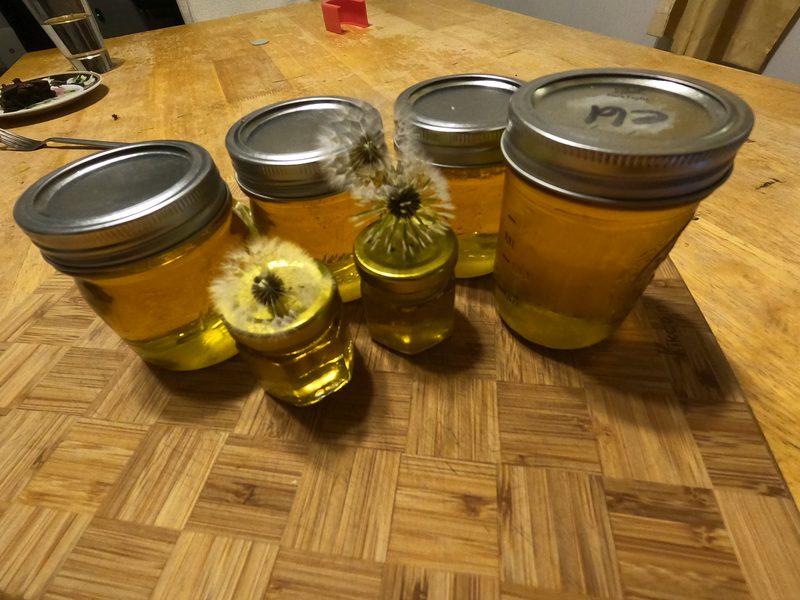
Notes: Beautiful golden color. Tastes like honey.
Dandelion Flower Wine
Uses: Seasonal celebration, digestive tonic, traditional country wine
Recipe: - 8 cups dandelion petals (200+ flowers) - 1 gallon water - 3 lbs sugar or honey - 1 lemon, sliced - 1 orange, sliced - Wine yeast (or bread yeast in traditional recipes)
Method: 1. Steep petals in boiling water 24 hours 2. Strain, add sugar, citrus 3. Add yeast 4. Ferment 1-2 months 5. Bottle, age 6+ months
Shelf life: 2-5 years (improves with age)
Notes: Traditional Appalachian recipe. Golden color, unique flavor.
Dandelion Root Glycerite
Uses: Liver support for those avoiding alcohol, children's preparation
Recipe: - Fill jar ¾ with dried dandelion root - Cover with vegetable glycerin (food grade) - Seal, label, store in dark place 6-8 weeks - Shake daily - Strain, store in amber dropper bottles - Dosage: ½-1 mL 2-3x daily
Shelf life: 2-3 years
Notes: Sweet taste (glycerin). Alcohol-free.
Dandelion Leaf Pesto (Culinary/Medicinal)
Uses: Nutritious food medicine, liver support, digestive bitter
Recipe: - 2 cups fresh dandelion leaves (young, spring leaves best) - ½ cup nuts (walnuts, pine nuts) - ½ cup olive oil - 2 cloves garlic - ¼ cup Parmesan (optional) - Salt to taste - Blend until smooth
Uses: Pasta, bread, crackers, sandwiches
Shelf life: 3-5 days refrigerated, 6 months frozen
Notes: More bitter than basil pesto. Delicious, nutritious.
⚠️ Safety Notes
Contraindications
- Pregnancy: Generally considered safe in food amounts. Avoid medicinal doses (insufficient safety data, traditional emmenagogue use).
- Breastfeeding: Safe in food amounts. May increase milk supply (traditional galactagogue). Medicinal doses—use caution.
- Children: Safe and widely used. Standard children's herb (gentle). Reduce dose by age/weight.
- Infants: Safe in very small amounts. Consult practitioner.
Drug Interactions
- Diuretics (water pills): Dandelion has diuretic effect. May enhance prescription diuretics. Monitor hydration.
- Diabetes medications: Dandelion may lower blood sugar. Monitor glucose closely. May enhance medication effect.
- Blood thinners (Warfarin): Dandelion contains vitamin K (blood clotting). Large amounts of leaves may interfere with warfarin. Moderate use generally safe.
- Antacids, acid reducers: Dandelion stimulates stomach acid. May interfere with acid-reducing medications.
- Ciprofloxacin, quinolone antibiotics: Dandelion may reduce absorption. Take 2+ hours apart.
- Lithium: Dandelion's diuretic effect may affect lithium levels. Monitor closely.
Allergic Reactions
- Asteraceae family allergy: Those allergic to ragweed, daisies, chrysanthemums may react to dandelion. Incidence ~1-2%.
- Contact dermatitis: Rare. Some report skin irritation from fresh sap (white latex in stems).
- Latex sensitivity: Dandelion contains natural latex (white sap). Those with latex allergy may react.
Overuse Concerns
- Long-term use: Generally regarded as safe for extended use. Traditional daily tonic.
- High doses: May cause digestive upset, diarrhea (bitterstimulates digestion excessively). Stick to recommended dosages.
- Oxalate content: Dandelion contains oxalates (like spinach). Those with kidney stones (oxalate type) should use caution with large amounts.
Wild Harvest Considerations
- Location: Avoid roadsides (pollution), dog areas (parasites, urine), sprayed lawns (herbicides).
- Identification: Easy to identify (yellow flowers, puffball seeds, serrated leaves, milky sap). Unlikely to confuse with toxic plants.
- Look-alikes: Cat's ear (Hypochaeris radicata) is similar but has hairy leaves. Both edible/medicinal.
- Sustainable harvest: Take only what you need. Leave plants to reseed. Harvest roots from large, established plants (Year 2+).
Gallbladder Concern
- Gallstones, bile duct obstruction: Dandelion stimulates bile production. Those with gallbladder disease should consult healthcare provider before use.
- Traditional use: Dandelion used to prevent gallstones (cholagogue), but may cause issues if stones already present.
🌱 Natural Soil Amendments (Zone 6b/7a)
Following The Loop Farmstead Natural Soil Amendments Standard—NO synthetic fertilizers, NO mined minerals.
At Planting (Optional—Dandelion Grows Wild)
- Compost: ½ inch incorporated (optional—dandelion thrives in poor soil)
- Local forest soil: 1-2 cups per planting area (mycorrhizal inoculation)
Annual Maintenance
- None needed: Dandelion requires no amendments, no care.
- Optional: Light compost application boosts leaf production.
Notes for Dandelion Specifically
- Dandelion thrives in low-fertility, compacted soil. No amendments needed.
- Deep taproot (6-18 inches) breaks compaction, mines minerals from subsoil.
- Indicator plant: Signals compacted soil, calcium-rich soil.
- Excellent for "problem" areas—poor soil, erosion control, pathways, lawns.
- Drought-tolerant once established.
- Often grows without planting (volunteer). Consider keeping beneficial "weed" patches.
- Dynamic accumulator: Mines calcium, potassium, iron from subsoil.
🐺 The Loop Farmstead Notes
Why We Grow Dandelion: - Liver support (bitter tonic) - Diuretic (water retention, kidney support) - Digestive bitter (stimulates digestion) - Nutritious greens (vitamins, minerals) - Coffee substitute (roasted root) - Skin health (traditional blood purifier) - Spring tonic (traditional use) - Pollinator support (early spring flowers for bees) - Soil health (deep taproot breaks compaction) - Free, abundant, no care required
Harvest Tips: - Leaves: Harvest young, tender leaves spring (before flowering). Less bitter. Fall regrowth also good. - Flowers: Harvest when fully open (April-June). Dry weather, mid-morning. Use petals (remove green sepals). - Roots: Dig fall (Year 2+, after frost) or early spring. Wash thoroughly, slice thin, dry immediately. - Sap: Collect from cut stems spring (white latex). Traditional wart remedy. - Drying: Roots take 1-2 weeks. Leaves dry in 1-2 days. Flowers dry quickly.
Where We Use It: - Liver support tincture (daily, before meals) - Diuretic tea (leaf, for water retention) - Digestive bitter (root tea before meals) - Nutritious greens (salads, sautéed) - Coffee substitute (roasted root) - Flower fritters (spring celebration) - Flower jelly (gifts, preserves) - Flower wine (traditional Appalachian)
Wild Harvest Note: - Dandelion grows wild throughout WV - No need to plant—identify, harvest existing patches - Verify no herbicides applied - Teach children to identify (edible wild plant) - "Poor man's lettuce"—free, nutritious food