48
Pages in West Virginia's application to the Department of Energy, with spent fuel storage as its first priority
Patrick Morrisey told West Virginia it would not become a dumping ground for nuclear waste. His own signature on the federal agreement said otherwise, and his own office's 48-page application had asked for the job. Three days after the story broke, he withdrew the state rather than explain it.
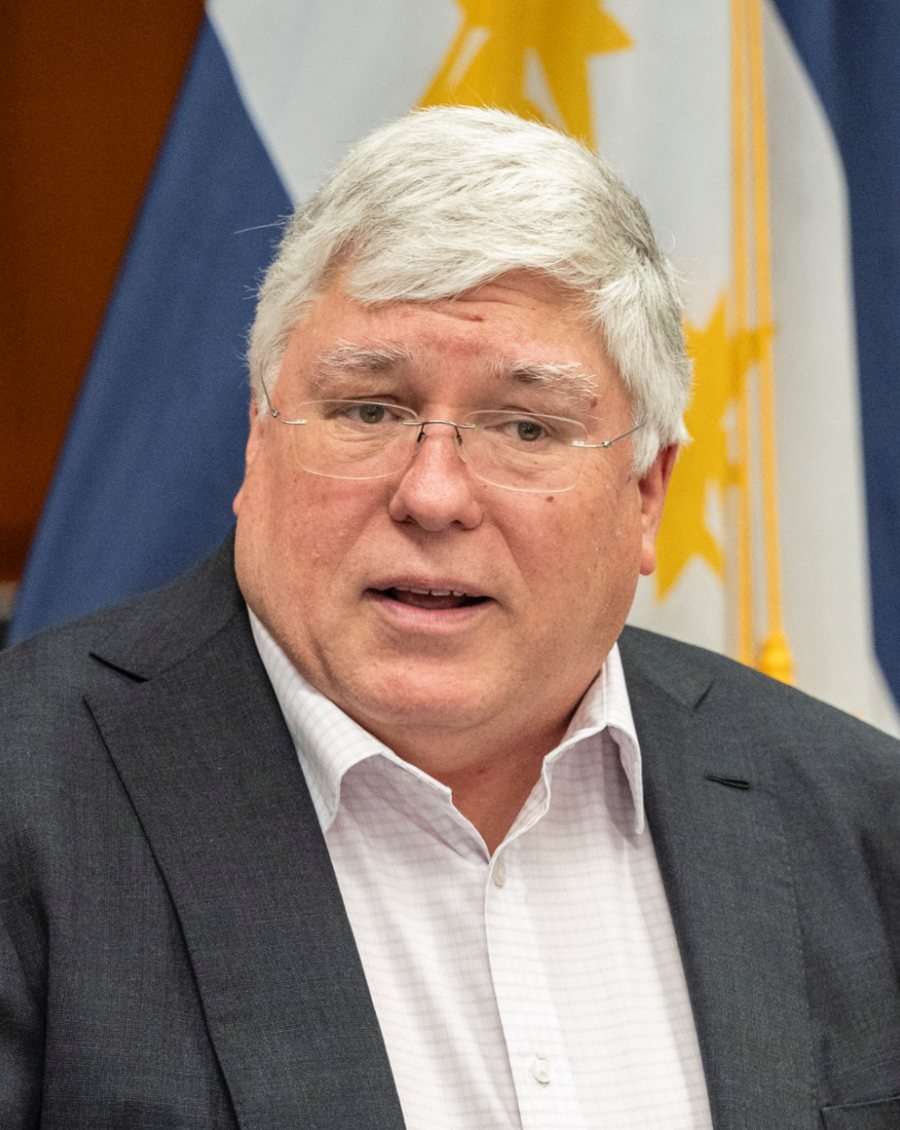
On Sunday, September 27, Governor Patrick Morrisey went to social media and settled the nuclear question in eleven words.
West Virginia will not be a dumping ground for nuclear waste. Period.
He went further. He directed his Office of Energy to make sure every site named in the state's final application "is considered only for nuclear generation or manufacturing, not as a dump." He posted that the Charleston Gazette-Mail, which had published the state's own filing, "got it wrong," and said the paper had intentionally misrepresented his administration's energy plans. Swiss coverage built on the Washington Post's reporting records that he first dismissed the stories as "fake news."
His spokesman, Lars Dalseide, was asked how a social media post squared with the state's written submission to the federal government. His answer is the most revealing sentence in the whole affair.
Governor's clear directive trumps bureaucrat letter. No nuclear waste. Once again, it couldn't be more clear.
Asked whether the governor had put that directive anywhere official, beyond a post, Dalseide confirmed it as a spokesman and said all future bureaucratic actions and letters would reflect it. That was Monday. The paperwork went out Wednesday.
Twenty-five days earlier, on September 2, Morrisey signed a seven-page memorandum of understanding with Energy Secretary Chris Wright, making West Virginia one of six finalist states for a Nuclear Lifecycle Innovation Campus. The memorandum is not a press release. It is the instrument that set up the next step, a binding Host Agreement, and it states what that agreement has to cover:
The Host Agreement shall address the acceptance and management of out-of-state used nuclear fuel, spent nuclear fuel, high-level radioactive waste, and greater than class C radioactive waste.
Out-of-state. That phrase is in the document he signed. It was quoted, identically, by West Virginia MetroNews, by the Intelligencer, and by MetroNews commentator Hoppy Kercheval, all reading the same seven pages.
So the state had a written agreement, in the governor's name, declaring that the next stage of this project would address taking other states' spent fuel and high-level waste. When the story broke, the governor's office called that agreement a bureaucrat letter and put a tweet above it.
The memorandum is the smaller half of the problem. In April, West Virginia's Office of Energy sent the Energy Department a 48-page response to the federal request for information, the document that got the state into the running at all. It is a sales pitch, and here is what it was selling.
The state put a consolidated interim storage facility at the top of its priority list. Second was research into final long-term storage of spent fuel in deep boreholes and engineered caverns. Third was advanced reactor deployment. Then fuel recycling, then enrichment and fabrication, then manufacturing.
West Virginia has identified partially spent and spent nuclear fuel streams management as a near-term actionable strategic opportunity. West Virginia proposes anchoring the Nuclear Lifecycle Innovation Campus around advanced fuel recycling, materials recovery and responsible long-term nuclear materials stewardship.
The document offered the state as "the nation's central hub for nuclear fuel recycling, interim storage, and long-term materials stewardship." It named Pennsylvania, Maryland, Virginia and Ohio, noting the four together hold 16 operating reactors with spent fuel stored at ten sites, and it proposed West Virginia's storage facility as the regional answer for them. It offered interim and long-term storage, in Kercheval's reading of the filing, including spent fuel generated out of state.
Four candidate sites were named: the old Hobet mine in Boone County, the former Century Aluminum site near Ravenswood, the Casto site along I-77 in Jackson County, and the No. 4 Old Standard site in Jefferson County. The filing said plainly that none had been fully vetted or geologically qualified.
The federal request that produced those 48 pages asked states to explain how they would handle spent fuel, used nuclear material and secondary waste streams, and it told them to do the selling "alongside robust community engagement and clear communication of risks and responsibilities associated with long-term waste management." The federal government demanded that states talk to their own people about the waste. West Virginia's answer was filed in April and nobody in Boone County heard about it until a newspaper printed it in late September.
| Date | What happened |
|---|---|
| Sept 2 | Morrisey and Secretary Wright sign the memorandum of understanding. |
| Sept 8 | Public announcement, half an hour of questions. One question on waste. The governor says "we're at the table." |
| Sept 9 | MetroNews reports the memorandum has not been released. Tennessee and Idaho posted theirs. |
| Sept 20 | MetroNews obtains the memorandum through a records request. |
| Sept 25 | Gazette-Mail publishes the filing. Print headline: "W.Va. offers to store nuclear waste." |
| Sept 27 | "Not a dumping ground. Period." The paper "got it wrong." |
| Sept 28 | Spokesman: the governor's directive "trumps bureaucrat letter." |
| Sept 29 | Senator Capito, asked directly whether the state must commit to disposing of the waste to participate: "My understanding, the answer to that is yes." |
| Sept 30 | One-page letter to the Energy Department declining to proceed. Deadline for the Host Agreement was that day. |
Read the withdrawal letter. It is one paragraph, written by Office of Energy director Nicholas Preservati to Marla Morales at the Energy Department, and it contains the sentence that ends the argument.
While we are unable to execute the Hosting Agreement and commit fully to its requirements, West Virginia remains fully committed to supporting President Trump and Secretary Wright's vision for a national nuclear renaissance.
Unable to commit fully to its requirements. That is the governor's own office conceding that the binding agreement carried requirements the state would not meet. If the program had nothing to do with taking waste, there was nothing in it to decline, and the state could have signed, kept the campus, kept the reactors, kept the manufacturing, and kept the promise of nearly 25,000 jobs. West Virginia walked away from all of it instead.
You do not withdraw from a contract over a clause you say is not in it. You withdraw because it is.
Kercheval, who has covered West Virginia politics for decades and does not write like a man with a grudge, described the sequence in one line: "self-congratulations, then a freak-out, and then gaslighting." He then did the thing that matters. He read the documents and reported that the Gazette-Mail story was accurate, that the waste provision was in the federal requirements, in the state's response, and in the memorandum, and that it was "all there in black and white."
Give the governor the strongest version of his own case, because it is stronger than he made it.
A consolidated interim storage facility is not a hole in the ground. Spent fuel comes out of a reactor into a pool, then into a sealed metal cask surrounded by steel and concrete, and the Nuclear Regulatory Commission has regulated that storage for decades with no dry-cask incident on the record. Ninety thousand metric tons of the stuff already sits at plants around the country, and by the Energy Department's own arithmetic it would fit on a football field stacked less than ten yards deep. A license can run forty years and be renewed. The man who runs Deep Isolation, which drills boreholes for this material, told the Intelligencer the casks should last a century and that permanent disposal is the longer-term answer.
"Dumping ground" is a fair description of the outcome the state volunteered for, and a false description of the process. The state never used the word. The newspaper never used it either. The governor introduced it, then attacked the paper for a word he brought.
So there was a real case to make for this campus, and Morrisey could have made it. West Virginia calls itself the country's fifth-largest energy producer, it has four brownfield sites that need industry, and the Energy Department was offering to concentrate a national industry in a state that just lifted its own nuclear ban in 2022. A governor who wanted that could have published the memorandum on September 2, held hearings in Boone and Jefferson counties, put the 48-page plan in front of the people who would live next to it, and argued it on the merits. Senator Capito said out loud what any honest salesperson would say: "West Virginia needs to be honest with what this is, the life cycle of nuclear that includes waste and other things, and how we're going to deal with it."
He did the opposite, and then he blamed the newspaper for noticing.
The second defense available to him is that a memorandum of understanding is a framework and that the Host Agreement was where he would draw his line. That defense requires him to have said so at the announcement, in writing, before the story broke. He had a half hour of questions on September 8 and one question about waste, and his answer was that conversations were happening and that protecting people was of paramount concern. That is not a line. That is a shrug with better grammar.
This is not the first time the Morrisey administration has promised openness and then routed the public around it.
In May 2025 the governor promised his administration would be more open about child welfare. Three months later, lawmakers learned from a press conference that four state long-term care hospitals had been sold for $60 million to an out-of-state operator: Hopemont in Terra Alta, Jackie Withrow in Beckley, John Manchin Sr. in Fairmont, Lakin in West Columbia. Senator Joey Garcia said nobody from the governor's office had contacted him. Delegate Jonathan Pinson said he was still chasing details after the announcement.
In September 2026 the memorandum on a nuclear campus stayed in a drawer until two newsrooms requested it, while Tennessee and Idaho had posted their own agreements and filings on public websites. The state that was loudest about winning the campus was the quietest about what it had promised to get it.
Then came the doctrine. A governor's spokesman told a reporter, on the record, that the governor's clear directive trumps a bureaucratic letter. That is a claim about how government works, and it is false. A tweet does not amend a signed agreement. An office does not get to declare its own filing unofficial after a newspaper quotes it.
Morrisey spent twelve years as West Virginia's attorney general. He sued the federal government repeatedly, and his public identity is built on knowing exactly what a clause does and who has to follow it. A man with that resume cannot claim he did not understand what the sentence about out-of-state spent fuel meant. He understood it, he signed it, and when it became public he denied it.
The state was one of six finalists. Five are still in. Capito, who chairs the Senate Environment and Public Works Committee and who held a hearing on the country's nuclear waste policy the week before, was asked on MetroNews Talkline whether a state that cannot meet the parameters would be passed over. "I would say yes."
The Republicans did not line up behind him. Treasurer Larry Pack: "Our state, and the rest of the country, cannot afford setbacks and missteps like this." House Speaker Roger Hanshaw, on Talkline, said he hoped the withdrawal was "just a temporary mistake that we can get corrected," and then: "I'm sorry that we did what we did. We shouldn't have." Asked whether he had been consulted about the bid before the state became a finalist, Hanshaw said he had not spoken with the administration about it, either before or after.
The people who live on the proposed ground got the news from a newspaper. Delegate Josh Holstein, who represents Boone County and chaired the state Republican Party, posted that neither he nor any Boone County official he had spoken to had been given any information or notified at all. He was later assured by the governor's office that there would be no waste dumping in Boone County, which is the assurance you give a man you did not tell the truth to the first time.
In Jefferson County, the site floated was Old Standard Quarry near Harpers Ferry, a Civil War battlefield and a bungee-jumping destination on porous limestone above a natural spring. Councilwoman Cara Keys told the Washington Post what a geologist would tell you: "Limestone basically acts like a highway for waste." Whether that disqualifies the site is a technical question that deserved a hearing. It got a press release, a denial, and a withdrawal.
Delegate Kayla Young, a Democrat who has worked nuclear policy for years and wanted this campus, put the whole failure in one sentence: "Energy is a conversation that needs to be had with people, not at them."
A public servant's first asset is his word, because everything else he does depends on other people being able to rely on it.
Morrisey spent his on a sentence that his own signature contradicts. Then he spent his spokesman's credibility defending it. Then he spent the state's place in a federal program to avoid answering for it. Three assets, gone in three days, to protect one claim that the paperwork had already killed.
The irony is on the record and it is not subtle. The governor who built a career on suing the federal government over the rule of law now runs an administration whose official position is that a social media post outranks a signed agreement with a federal department. The governor who attacked a newspaper for "fake news" was attacking it for quoting his own filing, accurately, with the page numbers attached. The governor who said "we're at the table" left the table rather than say what he had ordered.
And the thing he was protecting was never the waste. It was the appearance of having been careful. West Virginia could have had this argument in public, in April, with the 48 pages on a table in Boone County, and the answer might well have been yes. People accept hard things when they are told the truth about them. They do not accept being told that a document they can read does not say what it says.
That is the part that should end a political career, and it has nothing to do with nuclear power. It is the discovery that the man asking for your trust treats the paperwork as scenery. He is not confused about the waste. He is contemptuous of the people who would have had to live near it, and he assumed none of them would read the filing.
They read it. That is the whole story.
Every quotation above was read in the outlet that published it. The two primary documents, the memorandum of understanding and the 48-page response to the Energy Department's request for information, were obtained by the Charleston Gazette-Mail and West Virginia MetroNews through records requests; the withdrawal letter was published by MetroNews. Those three files sit on DocumentCloud, which blocked direct retrieval from this machine, so their text is quoted from the newsrooms that read them and from the Energy Department's own program page confirming that West Virginia signed a memorandum in September 2026.